

-
Section 1
- Let’s talk about diphtheria ….
- Let’s talk about chickenpox …
- Let’s talk about measels … .
- Zabezpieczony: Medicinal Plants
- Zabezpieczony: Medicinal Plants – Flower Anatomy
- Zabezpieczony: Face
- Zabezpieczony: Useful questions for obtaining case histories
- Robots against plants
- Zabezpieczony: Direct Speech v. Reported Speech revision
- Zabezpieczony: Direct Speech v. Reported Speech – additional exercises
- Zabezpieczony: Conjunctions +linking words – speaking+writing for medics
- Zabezpieczony: Traits of character. Mastering descriptive techniques.
- Zabezpieczony: Directed Speech v. Reported Speech – modal verbs – Medics
- Zabezpieczony: Directed Speech v. Reported Speech – questions and commands for Medics
- Zabezpieczony: Aromatherapy
- Environment
- Zabezpieczony: Prepositions part 1
- Zabezpieczony: Prepositions part 2
- Zabezpieczony: Prepositions part 3
- Zabezpieczony: Prepositions part 4 -Test
- Zabezpieczony: Prepositions part 5
- Zabezpieczony: Revision 2022 in 2023
- Zabezpieczony: Cell: Definition and Structure (Living Cells)
- Zabezpieczony: Speaking
- Zabezpieczony: Students’ book for FCE [U1]
Let’s talk about diphtheria ….
Task 1
Read the text and make notes. Mind the pronunciation, please.
Diphtheria. Source.
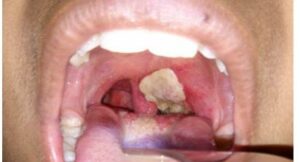
As the disease progresses, an adherent membrane (pseudomembrane) may begin to cover the tonsils, pharynx, and/or nasal tissues. If untreated, the pseudomembrane can extend into the larynx and trachea and obstruct the airway; this can lead to death.
Vocabulary bank: toxigenic strains, hide, BCE, pseudomembrane (false membrane, accidental membrane), deposit (fur on the tongue), prophylaxis, tonsils, pharynx (pharynges – plural), larynx, trachea, obstruct, contagious, cutaneous, pus,
Diphtheria is an acute, bacterial disease caused by toxin-producing strains of Corynebacterium diphtheriae . The name of the disease is derived from the Greek diphthera, meaning ‘leather hide.’ The disease was described in the 5th century BCE by Hippocrates, and epidemics were described in the 6th century AD by Aetius. The bacterium was first observed in diphtheritic membranes by Edwin Klebs in 1883 and cultivated by Friedrich Löffler in 1884. Beginning in the early 1900s, prophylaxis was attempted with combinations of toxin and antitoxin.
Nevertheless, diphtheria is a highly contagious and potentially fatal infection that can affect the nose and throat, and sometimes the skin. It’s rare in the UK, but there’s a small risk of catching it while travelling in some parts of the world.
Finally, the main symptoms of diphtheria are:
- a thick grey-white coating at the back of your throat
- a high temperature (fever) of 38C or above
- feeling sick
- sore throat
- headache
- swollen glands in your neck
- difficulty breathing and swallowing
If it affects your skin (cutaneous diphtheria), it can cause:
- pus-filled blisters on your legs, feet and hands
- large ulcers surrounded by red, sore-looking skin
Task 2 – answer the following questions:
What is the pharynx for?
What is the difference between the pharynx and trachea?
What is the derivation of the word “diphtheria”?
What are the symptoms of diphtheria?
Task 3 – Idioms describing health. Read and explain.

Task 4 – General English – do the exercises:
check your vocab. for academic English U1


